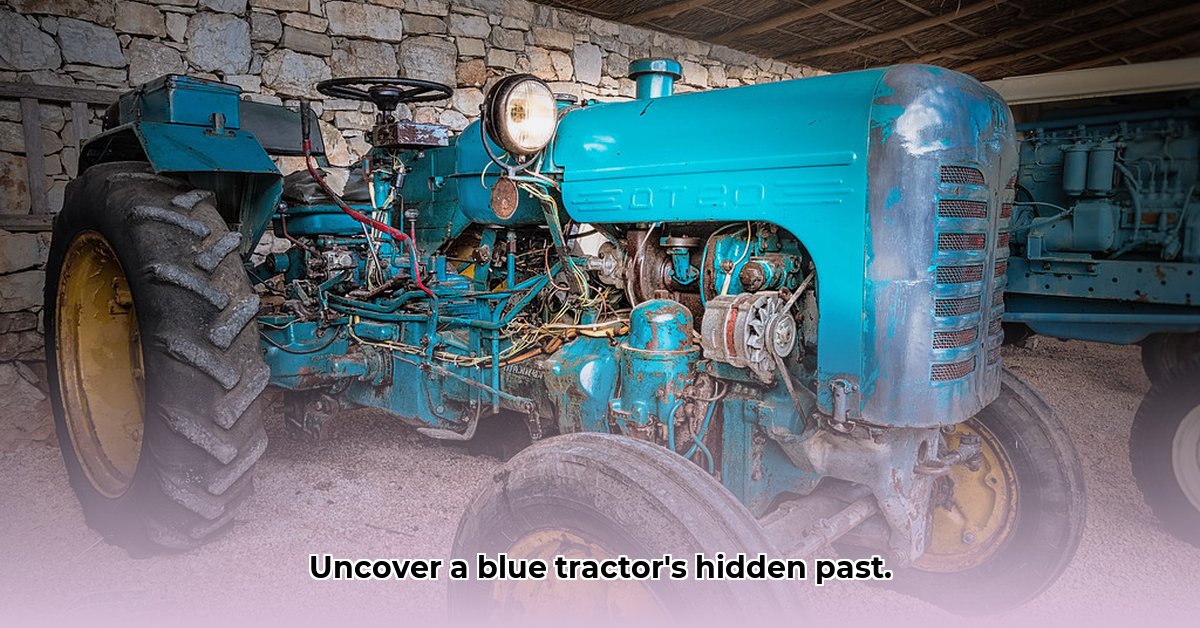
Old Blue Tractor: A Collectible's History
Have you ever heard of the John Blue G-1000 tractor? It's not a name that readily rolls off the tongue, but this rare machine is a fascinating piece of agricultural history. Produced in limited numbers during the 1970s, the G-1000 offers a captivating blend of innovative engineering and a surprisingly abrupt departure from the farming landscape. What made this tractor so unique, and why has it become a coveted collector's item? For more on vintage tractors, check out this great resource.
The G-1000's story begins in the 1970s, a decade of agricultural evolution. Farmers relied on durable equipment, and the G-1000, with its powerful International C60 rear-mounted engine (similar to those found in Farmall Cub tractors), offered a compelling proposition: unparalleled visibility. Unlike traditional tractors, the rear engine placement gave operators a clear view of their surroundings, making maneuvering much easier. Isn't that a clever design solution? This innovative approach, however, came with a significant price tag. Adjusted for inflation, the G-1000 cost nearly $20,000 – a substantial sum that placed it beyond the reach of most farmers.
But the G-1000's high cost wasn't the only factor contributing to its limited success. The agricultural industry was undergoing rapid change, and John Blue, demonstrating astute business acumen, strategically shifted their focus to liquid fertilizer application technology—a burgeoning market. This transition, while ensuring the company's survival, effectively marked the end of the G-1000's short life cycle. Did John Blue make the right choice by shifting their focus away from the G-1000?
Today, finding a John Blue G-1000 is like finding a needle in a haystack. The limited production run has unexpectedly transformed this once-overlooked tractor into a highly sought-after collector's item. A fully restored model can fetch prices exceeding $10,250, a significant increase from its original cost. This illustrates the powerful influence of scarcity in the collector's market. But the G-1000's significance goes beyond its monetary value. It serves as a microcosm of various factors, including innovative design and economic realities.
The limited production numbers of the G-1000—fewer than 200 units—further solidify its status as a rare collector's piece. The unique rear-engine design and its overall rarity make it a treasured possession for tractor enthusiasts. Owning a G-1000 today is akin to owning a piece of agricultural history, a testament to both ingenious design and the often unpredictable nature of the market. The tractor's enduring appeal lies not in its widespread use, but in its captivating rarity.
Let's examine how the G-1000 compared to its contemporaries in the 1970s. While precise historical data is limited, some educated inferences can be made. The high price point was undoubtedly a primary factor hindering its widespread adoption. Moreover, some experts suggest that its power and fuel efficiency might not have significantly surpassed those of more common tractors, further limiting its market appeal.
| Feature | John Blue G-1000 | Competitors (e.g., Ford, Deere) | Notes |
|---|---|---|---|
| Price (Adjusted) | Approximately $19,700 | Generally Lower | Significantly higher than competitors |
| Production Numbers | Fewer than 200 | Significantly Higher | Extremely limited production run |
| Engine | International C60 | Varied | Similar to engines in Farmall Cub tractors |
| Unique Design Features | Rear-mounted Engine, High-Arch Front End | Varied | Unusual design elements likely hindered sales |
This comparison highlights the key differences. While the G-1000's innovative features might have appealed to some, the price tag and limited availability likely prevented wider adoption.
The story of the John Blue G-1000 serves as a valuable reminder of the intricate interaction between innovation, market realities, and economic forces within the agricultural industry. Its limited success demonstrates that innovative designs alone are not always guaranteed to be commercially successful. This underscores why the G-1000 remains a captivating piece of history for collectors and enthusiasts. Ultimately, this rare and unique tractor story is a reminder that economic factors often dictate the fate of even the most inventive products.
How to Restore a John Blue G-1000 Tractor
Restoring a John Blue G-1000 is a significant undertaking. Given its rarity, sourcing parts and expertise is a crucial consideration. The following steps can help guide your restoration project.
Assessing Your John Blue G-1000
Before starting any work, thoroughly assess the tractor's condition. Document everything with photos and detailed notes, identifying any damage or missing components. Creating a detailed inventory is critical to planning your restoration and budgeting effectively.
Disassembly and Cleaning
Carefully disassemble the tractor, taking detailed photographs at each step and noting how everything fits together. Clean individual components appropriately, taking care of different materials. As this involves working with potentially hazardous materials, safety goggles and gloves are crucial.
Parts Sourcing and Repair
This is often the most challenging aspect. Due to the G-1000's rarity, finding parts may require extensive searching. Online forums, salvage yards, and established parts suppliers are your best bet.
Mechanical Restoration
This phase focuses on rebuilding or replacing worn components – engine, transmission, hydraulics, etc. If you lack mechanical expertise, engaging a qualified professional is strongly advised.
Cosmetic Restoration
Once mechanical components are restored, focus on the cosmetic elements. This might include cleaning, repainting, and replacing decals, ensuring authenticity wherever possible.
Reassembly and Testing
Carefully reassemble the tractor, double-checking each step against your photographs and notes. Thoroughly test all systems to confirm everything is functioning correctly.
Final Detailing
Complete the restoration with final touches—adding any remaining accessories, polishing and ensuring a professional finish.
Cost Considerations for Restoring a John Blue G-1000
| Item | Cost Range (USD) | Notes |
|---|---|---|
| Parts Sourcing | $500 - $5000+ | Highly variable depending on part availability & condition. |
| Mechanical Repairs | $1000 - $10,000+ | Dependent on the extent of mechanical issues. |
| Cosmetic Restoration | $500 - $3000+ | Ranges from simple cleaning to professional repainting. |
| Labor (if outsourced) | $5000+ | Significantly increases overall restoration costs. |
| Total Estimated Cost | $2000 - $20,000+ | Significant variability based on the tractor's initial condition and chosen restoration approach. |
The restoration process can be lengthy. While the potential value increase is significant, the investment of time, effort and money is considerable.